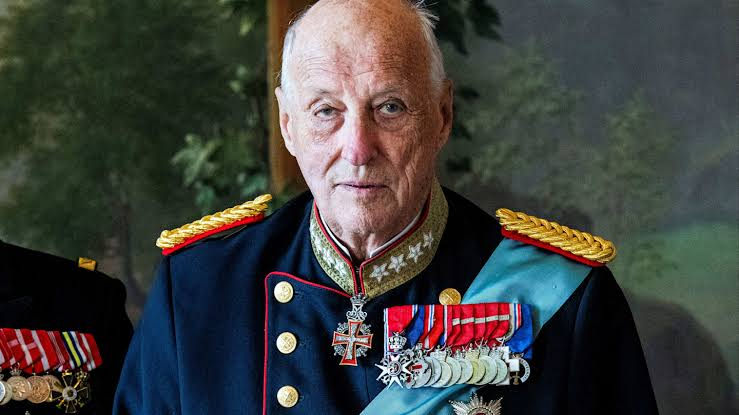
Current update: Norway’s Royal Court announced on August 28, 2026, that King Harald V had passed away peacefully at Oslo University Hospital Rikshospitalet at 6:35 a.m. He was 89. The Royal Court’s official biography records his birth on February 21, 1937, and his accession to the Norwegian throne in January 1991.
Who Was King Harald V?
King Harald V was the King of Norway from 1991 until his passing on August 28, 2026. He was born on February 21, 1937, at Skaugum in Asker, Norway, to Crown Prince Olav and Crown Princess Märtha. His grandfather was King Haakon VII.
For more than three decades, Harald served as Norway’s constitutional monarch and became one of the country’s most recognizable public figures. His responsibilities were largely representative and ceremonial, although the Norwegian Constitution gives the monarch several formal duties involving the government and the Council of State.
King Harald’s life also reflected several important periods in Norwegian history. He was a child during the Second World War, spent part of his childhood in exile, received military and university education, became Crown Prince in 1957 and eventually succeeded his father, King Olav V, in 1991.
His reign lasted more than 35 years.
The Royal Court announced that Harald passed away peacefully at Rikshospitalet in Oslo at 6:35 a.m. on Friday, August 28, 2026.
King Harald Biography at a Glance
| Biography Detail | Information |
|---|---|
| Full name | Harald V |
| Born | February 21, 1937 |
| Birthplace | Skaugum, Asker, Norway |
| Father | King Olav V |
| Mother | Crown Princess Märtha |
| Grandfather | King Haakon VII |
| Wife | Queen Sonja |
| Children | Crown Prince Haakon and Princess Märtha Louise |
| Became Crown Prince | 1957 |
| Became King | January 17, 1991 |
| Reign | 1991–2026 |
| Passed away | August 28, 2026 |
| Age | 89 |
| Royal motto | “All for Norway” |
King Harald’s Childhood
Harald’s childhood began at Skaugum, where he lived with his parents and his two older sisters, Princess Ragnhild and Princess Astrid.
His early years changed dramatically in 1940 when Germany invaded Norway during the Second World War.
The Norwegian Royal Family left Oslo to avoid being captured. Crown Princess Märtha and her three children eventually traveled through Sweden and later went to the United States. They remained there during much of the war before returning to Norway after Germany’s capitulation in May 1945.
Harald returned to Norway in June 1945 with his grandfather King Haakon VII, his mother and his sisters.
The experience of growing up during wartime was an important part of his early life. He later developed into the future heir to Norway’s throne while being educated in the country he would eventually serve as king.
Education and Military Training
After returning to Norway, Prince Harald attended Smestad School in Oslo.
He later attended Oslo Cathedral School, where he completed his upper secondary education in 1955. His education then moved toward military training and preparation for his future constitutional role.
Harald attended the Norwegian Cavalry Officers’ Training School and graduated from the Military Academy in 1959.
He subsequently studied at Balliol College, Oxford, from 1960 to 1962, focusing on social science, history and economics.
This combination of Norwegian military education and studies abroad helped prepare Harald for his responsibilities as Crown Prince.
When Did Harald Become Crown Prince?
Harald became Crown Prince in 1957 following the passing of his grandfather, King Haakon VII.
His father, Olav, became King Olav V, while Harald became the heir to the Norwegian throne.
As Crown Prince, Harald gradually took on more official responsibilities. He represented Norway at events at home and abroad and became particularly involved in promoting Norwegian business and industry internationally.
The Royal Court notes that he participated in numerous trade delegations and used his international travels to help promote Norwegian industry.
King Harald and Queen Sonja
King Harald married Sonja Haraldsen in 1968.
Their relationship attracted considerable attention because Sonja was not from a royal or aristocratic family. At the time, royal marriages were traditionally expected to involve members of other European royal families or nobility.
After discussions involving Norway’s political leadership, King Olav gave his consent for Crown Prince Harald to marry Sonja.
The wedding took place at Oslo Cathedral on August 29, 1968.
Sonja later became Queen Sonja when Harald ascended the throne in 1991.
The couple celebrated their 50th wedding anniversary in 2018.
King Harald’s Children
King Harald and Queen Sonja had two children: Princess Märtha Louise and Crown Prince Haakon.
Princess Märtha Louise was born in 1971, while Crown Prince Haakon was born in 1973.
Haakon became the heir to the throne and was the next in line to succeed his father. The official biography of Crown Prince Haakon identifies him as the son of Harald and Sonja and heir to the Norwegian throne.
King Harald and Queen Sonja also became grandparents through their children and maintained a prominent role within Norway’s modern royal family.
When Did King Harald Become King?
King Harald became King of Norway on January 17, 1991, after King Olav V passed away.
Four days later, on January 21, Harald swore an oath to uphold the Norwegian Constitution in the Storting, Norway’s parliament.
The King and Queen were later consecrated at Nidaros Cathedral in Trondheim on June 23, 1991.
Harald adopted the same royal motto used by his father and grandfather:
“All for Norway.”
His reign would continue for more than three decades.
What Were King Harald’s Duties?
The Norwegian monarchy is constitutional, meaning the King serves as the country’s head of state while elected political institutions exercise political power.
King Harald’s official responsibilities included presiding over the Council of State, formally opening the Storting each autumn, receiving foreign ambassadors and representing Norway during official visits.
He also participated in ceremonies, national celebrations and important events across Norway.
One of his important roles was helping represent the Norwegian state during moments of national celebration and periods of national hardship.
The Royal Court describes the King as a symbol of the Norwegian community and notes that he regularly traveled around the country to meet residents and visit institutions and communities.
King Harald and Norway’s Armed Forces
King Harald had a strong military background.
He completed military education and later held senior ceremonial military ranks. The Royal Court identifies him as the highest-ranking officer in Norway, holding the rank of General in the Army and Air Force and Admiral in the Navy.
His role did not mean that he personally directed Norway’s military operations. Military authority is exercised through the King in Council of State, with the Norwegian government holding ultimate responsibility for military matters.
King Harald’s Love of Sailing
One of the most interesting parts of King Harald’s life was his passion for sailing.
He was not simply a spectator. Harald competed internationally and represented Norway in sailing.
In 1964, he carried Norway’s flag during the opening ceremony of the Tokyo Olympic Games.
He and his crew won the world championship in 1987 with Fram X. In 2005, they became European champions with Fram XV.
Harald continued competing in sailing events for many years before ending his competitive sailing career in 2022.
His involvement with sport helped give the monarch a public identity beyond official ceremonies.
King Harald and Environmental Interests
Nature and environmental issues were also important to Harald.
As Crown Prince, he was among those involved in establishing the Norwegian branch of the World Wide Fund for Nature. He served as president of the Norwegian chapter for 20 years.
His interest in the natural world continued throughout his life.
He enjoyed outdoor activities such as fishing and hunting and traveled to different parts of the world to learn about environmental and indigenous issues.
The Royal Court also highlights his interest in Norway’s natural landscapes and his long-standing relationship with outdoor life.
King Harald’s Relationship With the Norwegian People
During his long reign, Harald became closely associated with Norway’s national identity.
One reason was his willingness to meet people throughout the country.
The King and Queen traditionally visited different counties, traveling to municipalities and meeting residents, local organizations and community groups.
These visits gave the royal couple an opportunity to interact with Norwegians outside Oslo and the formal setting of the Royal Palace.
Harald also appeared during major national events and periods of difficulty.
The Royal Court notes his role in expressing national grief following the July 2011 terrorist attacks in Norway.
King Harald’s Health in 2026
King Harald’s final months were marked by health concerns and several periods of medical treatment.
According to the Royal Court’s official announcements, his condition became serious in August 2026. The Palace reported that he had been receiving treatment for a bacterial bloodstream infection and that his condition later remained unchanged.
On August 28, 2026, the Royal Court announced that King Harald had passed away peacefully at Oslo University Hospital Rikshospitalet at 6:35 a.m.
He was 89 years old.
Following the announcement, the Norwegian Royal Palace lowered its flag to half-mast as a mark of national mourning.
Who Succeeds King Harald?
Crown Prince Haakon is the heir to the Norwegian throne.
Born on July 20, 1973, Haakon is the son of King Harald and Queen Sonja. The Royal Court identifies him as heir to the throne.
As Norway’s Crown Prince, Haakon has spent decades preparing for his future constitutional responsibilities.
His succession represents the next chapter in Norway’s modern royal history following Harald’s long reign.
King Harald’s Legacy
Harald’s legacy extends beyond the number of years he spent on the throne.
He represented Norway during a period of substantial social, political and cultural change. His reign began in 1991, shortly after the end of the Cold War, and continued into the 21st century.
Throughout those years, his role remained primarily constitutional, ceremonial and representative.
His interests also made him distinctive. He was a competitive sailor, an enthusiastic supporter of Norwegian sport, an advocate for environmental issues and a monarch who frequently traveled around the country.
His long partnership with Queen Sonja was another important part of his public life.
For many Norwegians, King Harald represented continuity and stability across several generations.
Frequently Asked Questions About King Harald
Who was King Harald V?
King Harald V was the King of Norway from January 17, 1991, until his passing on August 28, 2026. He was born in 1937 and was the son of King Olav V and Crown Princess Märtha.
How old was King Harald when he passed away?
King Harald was 89 years old. He was born on February 21, 1937, and passed away on August 28, 2026.
Who was King Harald’s wife?
King Harald’s wife was Queen Sonja. They married at Oslo Cathedral on August 29, 1968.
How long was King Harald king?
Harald became King of Norway on January 17, 1991, and remained on the throne until August 28, 2026, giving him more than 35 years as monarch.
Who are King Harald’s children?
King Harald and Queen Sonja had two children: Princess Märtha Louise and Crown Prince Haakon.
Who is next in line after King Harald?
Crown Prince Haakon is the heir to the Norwegian throne and succeeds his father as monarch.
What was King Harald’s royal motto?
His motto was “All for Norway,” the same motto used by his father and grandfather.
What sports did King Harald enjoy?
Sailing was one of King Harald’s greatest sporting interests. He competed internationally and won world and European sailing championships with his crews.
Where was King Harald born?
King Harald was born at Skaugum in Asker, Norway, on February 21, 1937.
Where did King Harald study?
He attended schools in Oslo before receiving military education in Norway. He later studied social science, history and economics at Balliol College, Oxford, from 1960 to 1962.
Conclusion
King Harald V was one of the defining figures of modern Norway’s constitutional monarchy.
Born in 1937, he experienced the disruption of the Second World War as a child, became Crown Prince in 1957 and ascended the throne in 1991. For more than 35 years, he represented Norway at home and abroad while carrying out the constitutional and ceremonial responsibilities of the Norwegian monarch.
His personal interests also shaped his public image. Harald was an accomplished sailor, a passionate sports supporter and a long-time advocate for nature and environmental issues.
His marriage to Queen Sonja and his role as father to Crown Prince Haakon and Princess Märtha Louise were equally important parts of his biography.
The Royal Court announced on August 28, 2026, that King Harald had passed away peacefully at Rikshospitalet in Oslo at the age of 89.
His reign now forms an important chapter in Norway’s modern history, while Crown Prince Haakon begins the next chapter of the Norwegian monarchy.